Saturday, February 6, 2010

The Great Global Warming Collapse -- A Commentary

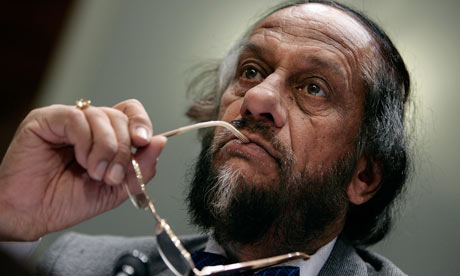
Dr Rajendra Pachauri, chairman of the UN Intergovernmental Panel on Climate Change.
Photograph: Getty Images


From The Globe And Mail:


As the science scandals keep coming, the air has gone out of the climate-change movement.

In 2007, the most comprehensive report to date on global warming, issued by the respected United Nations Intergovernmental Panel on Climate Change, made a shocking claim: The Himalayan glaciers could melt away as soon as 2035.

Read more ....

The Big Question: What Do We Know About The Human Brain And The Way It Functions?

Independent Graphics

From The Independent:

Why are we asking this now?

Scientists this week announced that they had succeeded in communicating with a man thought to be in a vegetative state, lacking all awareness, for five years following a road accident. Using a brain scanner they were able to read his thoughts and obtain yes or no answers to questions. They asked him to imagine playing tennis if he wanted to answer yes and to imagine walking through his home if he wanted to say no. By mapping the different parts of the brain activated in each case with the scanner, the scientists were able accurately record his reponses.

Read more ....

Do We Want Brain Scanners To Read Our Minds?

Scientists can communicate with vegetative patients Photo: GETTY IMAGES

From The Telegraph:


As 'vegetative' patients ‘talk’ to scientists, Professor Colin Blakemore assesses the profound implications this has for the sick - and the healthy.


What nightmare could be worse than being buried alive? Conscious, terrified, but unable to communicate through the impenetrable barrier of a coffin lid and a metre of earth. In the past few days, this ultimate horror has been transformed from the stuff of bad dreams and B movies to two very different front page stories.

Read more ....

21st Century Energy: Some Sobering Thoughts


From OECD Observer:

Transition to new energy sources is unavoidable, but here are five sobering first principles to remember along the way.

Are we about to switch to new energy sources? Grandiose plans are being drawn up for installing veritable forests of giant wind turbines, turning crops and straw into fuel ethanol and biodiesel, and for tapping solar radiation by fields of photovoltaic cells. As with most innovations, there is excitement and high expectation. Will these developments and other renewable energy conversions one day replace fossil fuels? Eventually they will have to, but a reality check is in order.

Read more ....

Blizzard Warning For DC, NYT: “Capital Is Crippled As Blizzard Continues “

Snow covers a decorative iron fence at the White House in Washington, on Saturday, during a snow storm in the Washington area. Photo: AP via The Hindu

From Watts Up With That?:

A winter storm continued its blizzard rage in some parts of the Mid-Atlantic region on Saturday morning, dumping nearly two feet of wet, heavy snow that cut power to about 200,000 residents, caused the roof of a private jet hangar to collapse at Washington Dulles International Airport and forced the nation’s capital into quiet hibernation.

All postal operations in the Washington area, including the suburbs in Northern Virginia and Maryland were canceled on Saturday.

Read more ....

Did An Asteroid Strike In Australia Plunge Anglo-Saxon England Into A Mini Ice-Age?

A veil of dust thrown up by an asteroid 2,000ft across may have caused a mini ice-age in 535AD

From The Daily Mail:

A giant meteorite that broke in two as it crashed off Australia, could have been responsible for a mini-ice age that engulfed Britain in 535AD.

The claim was made by marine geophysicist Dallas Abbott at a meeting of the American Geophysical Union last month.

She found evidence of two substantial impact craters in the Gulf of Carpentaria, off the northern Australian coast.

Read more ....

Kindle, iPad, MacMillan, And The Death Of A Business Model


From Pajamas Media:


If you visited Amazon.com this weekend, hoping to buy a book that happened to have been published by MacMillan, you got a rude surprise. You couldn’t do it. Whether you hoped to buy an e-book for the Kindle, or an old-fashioned physical book, Amazon wouldn’t sell it to you. In a protest against the pricing model that MacMillan and other publishers had negotiated with Apple for the iBookstore, Amazon simply removed the “buy” button from MacMillan’s books.

The protest didn’t last very long — just long enough to be noticed and to make the New York Times on the evening of January 29. By the evening of the 31st, Amazon had relented, with the following statement:

Read more ....

Secrets To Superb Malting Barleys Explored

ARS chemist Mark Schmitt is discovering what happens -- biochemically -- inside malting barley grains as they sprout, so that plant breeders will have a better basis for developing superior varieties. (Credit: Image courtesy of USDA/Agricultural Research Service)

From Science Daily:

Science Daily (Feb. 6, 2010) — Many favorite breakfast cereals, candies, beers, and other foods and beverages owe much of their smooth, delicious flavor to malt. Malting barleys--the source of that malt--are the focus of studies at the Agricultural Research Service's (ARS) malting barley laboratory in Madison, Wis., part of the Cereal Crops Research Unit.

Read more ....

'Snowmageddon'


From Live Science:

Write this one down. President Obama called it "Snowmageddon." Remember back when we just called them things like "The Great Storm of ..."?

Reuters is sticking with "powerful snowstorm," noting though that there could be 20 to 30 inches of snow and near-blizzard conditions from Virginia to southern New Jersey. MSNBC calls it a blizzard and reports 2 feet have already fallen in some parts of Maryland. CNN avoids the word "blizzard" but employs "clobbered," which sounds just as bad.

Read more ....

A Bidding Frenzy For Search Engine Keywords During The Super Bowl

The Super Bowl will be held Sunday at Sun Life Stadium in Miami. Advertisers can tweak their online marketing campaigns in real time. (Win McNamee / Getty Images / February 4, 2010)

From The L.A. Times:

Advertisers will vie for the top 'sponsored links,' bidding on terms they think lots of fans will be seeking as they watch the game.

When New Orleans takes on Indianapolis at the Super Bowl on Sunday, Brandon Nohara will be sprawled in front of his big-screen TV like millions of others across the nation, drinking beer as friends pack into his apartment.

But Nohara, a marketing analyst for the Bay Area online retailer CafePress, will also be on the job.

Read more ....

Top 5 Technologies In NFL Stadiums

(Photograph by Ronald Martinez /Getty Images)

From Popular Mechanics:

As football fans around the world turn their attention toward the Miami Dolphins' Sun Life Stadium for Super Bowl XLIV this Sunday, Popular Mechanics looked at the other 30 NFL stadiums and found five that lead the league in innovation.

Read more ....

Which Organs Can I Live Without, And How Much Cash Can I Get For Them?

Pricey Organs Victor de Schwanberg/Photo Researchers

From Popular Science:

First, a disclaimer: Selling your organs is illegal in the United States. It’s also very dangerous. Handing off an organ is risky enough when done in a top hospital, even more so if you’re doing it for cash in a back alley. No, really: Don’t do this. OK? OK.

Read more ....

The Location-Based Future Of The Web

Get the information relevant to where you are (Image: Russel A. Daniels/AP/PA)

From The New Scientist:

THAT the internet is the same for everyone, wherever they are, is one of its defining features. But increasingly your location matters, and will alter what you see online.

Two events last week offer a preview of the web's location-aware future. Social network Twitter started telling users the most talked-about topics in their vicinity. Meanwhile, Canadian newspaper publisher Metro teamed up with location-based social network Foursquare to offer users restaurant reviews based on their GPS-enabled phone's location.

Read more ....

The Big El Niño That Nobody Saw


From Discovery News:

One of the biggest, meanest El Niño episodes of the 20th Century came and went and almost nobody noticed. It was 1918, a year when many people had their hands full just staying alive. The first World War was ravaging Europe, and an influenza pandemic of Biblical proportions was killing more than 50 million around the world.

Read more ....

Feds Still Unhappy With Google Deal

From CBS News:

Book Battle Continues As DOJ Frets About Threat to Stifle Competition, Undermining of Copyright Laws.

(AP) The U.S. Justice Department still thinks a proposal to give Google the digital rights to millions of hard-to-find books threatens to stifle competition and undermine copyright laws, despite revisions aimed at easing those concerns.

The opinion filed Thursday in New York federal court is a significant setback in Google's effort to win approval of a 15-month-old legal settlement that would put the Internet search leader in charge of a vast electronic library and store. A diverse mix of Google rivals, consumer watchdogs, academic experts, literary agents, state governments and even foreign governments have already urged U.S. District Judge Denny Chin to reject the agreement.

Read more ....

Pluto's Dynamic Surface Revealed By Hubble Images

The maps of Pluto reveal a mottled brown and charcoal surface.

From The BBC:

The icy dwarf planet Pluto undergoes dramatic seasonal changes, according to images from the Hubble Space Telescope.

The pictures from Hubble revealed changes in the brightness and the colour of Pluto's surface.

Mike Brown, from the California Institute of Technology, suggested Pluto had the most dynamic surface of any object in the Solar System.

Hubble will provide our sharpest views of Pluto until the New Horizons probe approaches in 2015.

The researchers note that Pluto became significantly redder in a two-year period, from 2000 to 2002.

Read more ....

Solar Flares Back, But Oddly Small

Sun activity rises and falls in an 11-year-long cycle, such as this cycle from top left taken in early 1997 to bottom right, taken in early 2000. Credit: NASA

From Cosmos:

SYDNEY: After a long silence, the Sun erupted in an unusual pattern of small solar flares, said an Australian astrophysicist, which may provide a unique opportunity to predict when bigger solar flares will erupt.

Solar flares are explosions in the Sun's atmosphere marked by a burst of X-rays. They increase or decrease in a roughly 11-year cycle — larger flares can reach tens of millions of degrees Celsius and interfere with communications satellites and affect astronauts' health.

Read more
....

Friday, February 5, 2010

Ancient Human Teeth Show That Stress Early in Development Can Shorten Life Span

Teeth from a site near Cuzco, Peru, show grooves of enamel damage.
(Credit: Valerie Andrushko)


From Science Daily:

ScienceDaily (Feb. 5, 2010) — Ancient human teeth are telling secrets that may relate to modern-day health: Some stressful events that occurred early in development are linked to shorter life spans.

"Prehistoric remains are providing strong, physical evidence that people who acquired tooth enamel defects while in the womb or early childhood tended to die earlier, even if they survived to adulthood," says Emory University anthropologist George Armelagos.

Read more ....

Bees See Your Face As A Strange Flower


From Live Science:

Bees can learn to recognize human faces, or at least face-like patterns, a new study suggests.

Rather than specifically recognizing people, these nectar-feeding creatures view us as "strange flowers," the researchers say. And while they might not be able to identify individual humans, they can learn to distinguish features that are arranged to look like faces.

The results suggest that, even with their tiny brains, insects can handle image analysis. The researchers say that if humans want to design automatic facial recognition systems, we could learn a lot by using the bees' approach to face recognition.

Read more ....

Are Iran's New Anti-Helicopter Missiles A Real Threat to Apaches?

AH-64A Apache Helicopter (Photo by Getty Images/Don Farrall)

From Popular Mechanics:

A new Iranian missile and the Pentagon's funding illustrate the importance, and the vulnerabilities, of helicopters in modern battlefields.

Call it a case of defense-press diplomacy: An Iranian colonel this week spoke publicly about a "special weapon" that was tailor-made to destroy U.S. Apache attack helicopters. The government-run Iranian news agency also released images of the shoulder-fired surface-to-air missile.

In the photo, the launcher is to the left, in green, and the grey missile is also to the left, with a white cap covering the seeker at the tip. The straight black piece sticking out is a simple aiming device

Read more ....