Thursday, April 15, 2010

Small, Ground-Based Telescope Images Three Exoplanets

This image shows the light from three planets orbiting a star 120 light-years away. The planets' star, called HR8799, is located at the spot marked with an 'X.' (Credit: NASA/JPL-Caltech/Palomar Observatory)

From Science Daily:

ScienceDaily (Apr. 14, 2010) — Astronomers have snapped a picture of three planets orbiting a star beyond our own using a modest-sized telescope on the ground. The surprising feat was accomplished by a team at NASA's Jet Propulsion Laboratory in Pasadena, Calif., using a small portion of the Palomar Observatory's Hale Telescope, north of San Diego.

Read more ....

Supervolcano: How Humanity Survived Its Darkest Hour


From New Scientist:

THE first sign that something had gone terribly wrong was a deep rumbling roar. Hours later the choking ash arrived, falling like snow in a relentless storm that raged for over two weeks. Despite being more than 2000 kilometres from the eruption, hominins living as far away as eastern India would have felt Toba's fury.

Read more ....

Giant Natural Particle Accelerator Above Thunderclouds

A lightning researcher at the University of Bath has discovered that during thunderstorms, giant natural particle accelerators can form 40 km above the surface of the Earth. On Wednesday 14th April Dr. Martin Fullekrug will present his new work at the RAS National Astronomy Meeting (NAM 2010) in Glasgow. The image shows a transient airglow or 'sprite' above a thunderstorm in France in September 2009. (Credit: Serge Soula / Oscar van der Velde)

From Science Daily:

ScienceDaily (Apr. 14, 2010) — A lightning researcher at the University of Bath has discovered that during thunderstorms, giant natural particle accelerators can form 40 kilometers above the surface of the Earth.

On April 14, Dr. Martin Fullekrug presented his new work at the RAS National Astronomy Meeting (NAM 2010) in Glasgow.

Read more ....

Is Earth Shaking More?


From Live Science:

As the numbers of buried or dead continue to climb from today's 6.9-magnitude earthquake in China, an event so close on the heels of the devastating Chile and Haiti earthquakes, you might wonder if Earth is shaking more lately. Perhaps, scientists say, but not unusually so.

Seismic activity may be higher in recent years than the long-term average, but it's still not out of the normal range, the experts contend.

Read more ....

NSA On The Flash-Media Hunt

From Next Gov.:

Shh, the National Security Agency has developed a software tool that detects thumb drives or other flash media connected to a network, and any federal agency can get a copy free -- no box tops or coupons required.

The NSA provided a brief tantalizing description of its USBDetect 3.0 Computer Network Defense Tool in the unclassified part of its fiscal 2011 budget request.

Read more ....

Space Storms Could Knock Out National Grid And Sat Navs

From The Telegraph:

Space storms caused by the Sun could knock out power supplies and satellite navigation systems in Britain, claim scientists.

The solar flares and sunspots throw massive clouds of electrically charged gas at the Earth which cause power surges and throw compasses into disarray.

The weather in space has been through an unprecedented calm period in the last century but the researchers believe we could be entering a more volatile period.

Read more
....

Spectacular Sunsets, Blue Moons And Possibility Of a Gloomy Summer As Volcanic Ash Drifts Across Britain


From The Daily Mail:

The cloud of volcanic ash drifting across the UK from Iceland is set to produce some of the most spectacular sunsets in recent history.

Skywatchers can look forward to stunning light displays and other effects as ash spreads high in the atmosphere. However, experts fear the eruption could spark off a larger volcano nearby, causing a cold and gloomy summer.

Read more ....

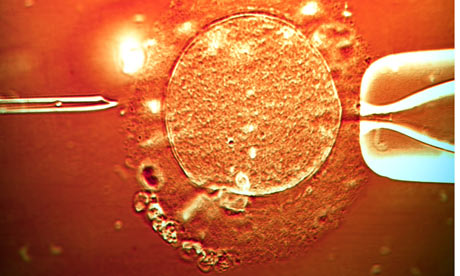
Scientists Reveal Gene-Swapping Technique To Thwart Inherited Diseases

Fertility treatment in action.
Photograph: Zephyr/SPL/Getty Images/Science Photo Library RF


From The Guardian:

Transfer of healthy material from fertilised to donated eggs could stop women passing on incurable illnesses

Scientists today offered new hope for women at risk of passing on certain inherited diseases to their children, in the form of a pioneering technique to move healthy genetic material from fertilised eggs into donated ones.

Read more ....

Venus 'Still Volcanically Active'

Volcanic peak Idunn Mons. Bright colours indicate recent flow

From The BBC:

Data from Europe's Venus Express probe suggests that Earth's neighbour may still be able to erupt volcanoes.

Relatively young lava flows have been identified on the planet's surface by the spacecraft's infrared instrument.

The flows show up as having a different composition to the surrounding surface material.

Read more ....

Entangle Qubits For A True Random Number Machine

From New Scientist:

PURE randomness is surprisingly difficult to create, even if you draw on the inherent randomness of quantum mechanics. Now, though, a "true" random number generator is on the cards, which may help create the ultimate cryptographic messages.

Existing quantum random number generators are only as reliable as their parts. For example, some devices send single photons through a beam-splitter and record the path taken, but a pattern could emerge over time if the beam-splitter comes to favour one direction or the materials degrade. A new number generator produces random strings of numbers without the worry of such flaws, because it relies on the inherently random behaviour of two quantum-entangled objects.

Read more ....

Evidence Of First Virus That Infects Both Plants And Humans

Tree Afflicted With Chestnut Blight Don't worry. Far as anyone knows, blight still isn't contagious for humans. James Bowe, via Flickr.com

From Popular Science:


From rabies to bird flu to HIV, diseases passing from animals to humans is a well-known phenomenon. But a virus jumping from plants to humans? Never. At least, that's what doctors thought until Didier Raoult of the University of the Mediterranean in Marseilles, France, discovered that the mild mottle virus found in peppers may be causing fever, aches, and itching in humans. If validated, this would mark the first time a plant virus has been found to cause problems in people.

Read more ....

Cockroach Ancestor Predates Dinosaurs

(Credit: Imperial College London and the Natural History Museum)

From Discovery News:

If it seems like cockroaches have been around forever, they nearly have. Check out this 300-million-year-old cockroach ancestor that lived several million years before the world's first dinosaurs emerged.

A new 3-D virtual model of the insect is described in the journal Biology Letters.

Imperial College London scientists created the model, which you'll view shortly, to show all of the details on Archimylacris eggintoni, which is an ancient ancestor of modern cockroaches, mantises and termites. This insect scuttled around early forests during the Carboniferous period 359 - 299 million years ago, which was a time when life had recently emerged from the oceans to live on land.

Read more ....

Wednesday, April 14, 2010

Solar Explosion Tracked All The Way From The Sun To Earth

The Sun imaged with the EIT instrument on the SOHO spacecraft. The eruption event studied by the team originated in the brighter active region slightly above and to the left of centre. (Credit: CDAW/ESA/NASA/Solar Physics)

From Science Daily:

ScienceDaily (Apr. 14, 2010) — An international group of solar and space scientists has built the most complete picture yet of the full impact of a large solar eruption, using instruments on the ground and in space to trace its journey from the Sun to Earth.

Dr Mario Bisi of Aberystwyth University presented the team's results, which include detailed images, on the 13th of April at the RAS National Astronomy Meeting in Glasgow.

Read more ....

Why Women Stay In Abusive Relationships

From Live Science:

A new study provides insights into the behavior of women entrenched in an abusive relationship with their male partner.

Researchers discovered that many who live with chronic psychological abuse still see certain positive traits in their abusers — such as dependability and being affectionate — which may partly explain why they stay.

Read more ....

Stellar 'Pollution' May Be Remains Of Watery Planets

Sucking up rocky pollutants (Image: NASA/JPL-Caltech)

From New Scientist:

A lost generation of planets may now be no more than a whiff of pollution in the atmospheres of their dead parent stars. If so, it would suggest that rocky planets are common, and hints that most such planets have water.

White dwarfs – the dense remnants of ordinary stars – usually have very pure atmospheres dominated by the lightweight elements hydrogen and helium, because heavier elements tend to sink into a star's interior. But about 20 per cent of white dwarfs are tainted by traces of heavier elements.

Read more ....

Jumbo Planets Spotted Orbiting Backwards Around Nearby Stars

ESO/L. Calçada

From USA Today:

Wrong way planets -- two of nine jumbo planets reported Tuesday by European astronomers -- orbit opposite their star's rotation, unlike our own solar system.

The discovery means six of 27 "hot Jupiters", gas giant worlds orbiting close-in to their stars reported in recent years by the Wide Angle Search for Planets (WASP) team, orbit the wrong way around stars. The WASP team searches for "transit" planets, ones that cause dips in the light from their stars, revealing their orbit's characteristics.

Read more ....

Facebook Announces New Safety Measures But No Panic Button

From The Guardian:

The social networking site will introduce a 24-hour police hotline, awareness campaign and a new system of reporting abuse.

Facebook has responded to calls for increased online safety by announcing a range of new measures including a 24-hour police hotline, a £5m education and awareness campaign and a redesigned abuse reporting system, but has declined to add a logo linking to the Child Exploitation and Online Protection Centre.

Read more ....

Can The Mobile Phone Chips Of The Future Kill The Desktop Computer?

Texas Instruments Blaze TI's reference design runs two touchscreen monitors at once. TI

From Popular Science:

If you have a smartphone, you're just as likely to Google from your handset as you are from a PC-based Web browser. That's because, in some cases, a high-end smartphone is just as powerful and rich a media experience as a computer. The pocketable, always-on, always-connected computer has long been the dream, and now, it's the reality. But the next generation of mobile phone brains promises to take the smartphone paradigm even further--maybe even so far that it replaces your desktop machine.

Read more ....

Mummy Of A 'Tiny, Wide-Eyed Woman' Discovered In Egyptian Oasis

A gypsum mask unearthed alongside a sarcophagus recently discovered in Bahariya

From The Daily Mail:

Egyptian archaeologists discovered an intricately carved plaster sarcophagus portraying a tiny, wide-eyed woman dressed in a tunic in a newly uncovered complex of tombs at a remote desert oasis.

It is the first Roman-style mummy found in Bahariya Oasis some 186 miles southwest of Cairo, said archaeologist Mahmoud Afifi, who led the dig.

The find was part of a cemetery dating back to the Greco-Roman period containing 14 tombs.

Read more ....

The Rise Of The App Entrepreneur

From The BBC:

The soaring popularity of smart phones has created a new type of entrepreneur - the "app developer".

Whether it is finding ladies' toilets on the London underground, identifying bird songs, forecasting snow conditions at ski resorts or just buying stuff online, somebody, somewhere has come up with a clever little computer program that lets you do the task from your handset.

The industry has grown up around the iPhone. More than 140,000 different iPhone applications have appeared since Apple opened its Apps Store on iTunes to outside developers in July 2008.

Read more ....