Tuesday, March 30, 2010

Moral Judgments Can Be Altered

In a new study, researchers disrupted activity in the right temporo-parietal junction by inducing a current in the brain using a magnetic field applied to the scalp. They found that the subjects' ability to make moral judgments that require an understanding of other people's intentions -- for example, a failed murder attempt -- was impaired. (Credit: Graphic by Christine Daniloff)

From Science Daily:

ScienceDaily (Mar. 30, 2010) — MIT neuroscientists have shown they can influence people's moral judgments by disrupting a specific brain region -- a finding that helps reveal how the brain constructs morality.

To make moral judgments about other people, we often need to infer their intentions -- an ability known as "theory of mind." For example, if a hunter shoots his friend while on a hunting trip, we need to know what the hunter was thinking: Was he secretly jealous, or did he mistake his friend for a duck?

Read more ....

Mystery of Great Civilization's Destruction Revealed

The religious complex of Angkor Wat was center of a civilization that depended for irrigation on a vast network of canals, embankments and reservoirs. Credit: Charles J. Sharp.

From Live Science:

Climate change might have helped bring about the fall of the ancient Khmer civilization in Angkor, Cambodia, nearly 600 years ago, new research suggests.

Historians have given various explanations for the fall of the empire that stretched across much of Southeast Asia between the ninth and 14th centuries (801 to 1400), from land overexploitation to conflict with rival kingdoms. But the new study offers strong evidence that two severe droughts, punctuated by bouts of heavy monsoon rain, could have weakened the empire by shrinking water supplies for drinking and agriculture, and damaging Angkor's vast irrigation system, which was central to its economy.

Read more ....

How It Works: Taser's Electrified Shotgun Slug


From Popular Science:

It’s midnight. You’re a cop patrolling the wrong side of town when you spot a mugging. The assailant is about 40 feet away, out of range of your stun gun. You shout, but he darts down an alley. It’s a dead end. The crook picks up a bottle, hurls it at your head, and makes a break for the street. You draw your gun.

Read more ....

Assault Breacher Vehicles Beat Bombs In Afghanistan


From Popular Mechanics:

Marine corps engineers in Afghanistan have a new beast of a vehicle to help them defeat explosive booby traps.

The civilian mechanics at Anniston Army Depot in Alabama usually only fix vehicles for the Army, not design them for the Marine Corps. But as Marines push into contested areas of Afghanistan, their engineers face a persistent threat from roadside bombs. The mechanics at Anniston saw they could build a safe ride for these military engineers by adding off-the-shelf equipment to an M1A1 Abrams battle tank. The result, called the Assault Breacher Vehicle (ABV), maximizes the depot staff’s experience at fixing the M1A1 and their ability to mount heavy engineering equipment, including a 12-foot plough, onto its hull. The Army donated excess tank parts from its inventory to create the ABV.

Read more ....

My Comment: This is a monster.

New iPhone Could End AT&T's U.S. Monopoly


From The Wall Street Journal:

Apple Inc. plans to begin producing this year a new iPhone that could allow U.S. phone carriers other than AT&T Inc. to sell the iconic gadget, said people briefed by the company.

The new iPhone would work on a type of wireless network called CDMA, these people said. CDMA is used by Verizon Wireless, AT&T's main competitor, as well as Sprint Nextel Corp. and a handful of cellular operators in countries including South Korea and Japan. The vast majority of carriers world-wide, including AT&T, use another technology called GSM.

Read more ....

Oceanology: Robot 'Gliders' Swim The Undersea World

Engage the wave drive (Image: Liquid Robotics)

From New Scientist:

THE way we study oceans could be transformed by a high-tech "surfboard" that generates its own power from sunlight and water waves. The device is capable of navigating at sea for months at a time and recently completed a 4000-kilometre trip from Hawaii to San Diego, California.

Read more ....

Cern's Giant Collider Is Back – And The Hunt For Fundamental New Insights Is On

The Large Hadron Collider is set for record-breaking high-energy particle experiments after an 18-month delay for repairs. Photograph: Reuters

From The Guardian:

• Two beams of protons will be collided at record energy levels
• Large Hadron Collider may find Higgs boson, or 'God particle'

The largest, most complex scientific instrument in the world will begin its long-delayed hunt for new particles, forces and extra dimensions on Tuesday at Cern, the European Nuclear Research Organisation, on the outskirts of Geneva.

Read more ....

Picking Our Brains: What Are Memories Made Of?

Want to forget a fright? (Image: WIN-Initiative/Getty)

From New Scientist:

MEMORIES are the basic stuff of thought. We access our stores of knowledge every time we perform a task, communicate through speech or formulate the simplest concepts. Yet the physical form of memory has long been mysterious. What changes occur in the brain when a new memory is encoded?

Read more
....

Atom Smasher Will Help Reveal 'The Beginning'

Physicists gather at CERN to witness results of the LHC's first half-power particle collisions. Photograph courtesy Maximilien Brice, CERN

From The Washington Post:

GENEVA -- The world's largest atom smasher threw together minuscule particles racing at unheard of speeds in conditions simulating those just after the Big Bang - a success that kick-started a megabillion-dollar experiment that could one day explain how the universe began.

Scientists cheered Tuesday's historic crash of two proton beams, which produced three times more energy than researchers had created before and marked a milestone for the $10 billion Large Hadron Collider.

Read more ....

US Marines Embrace Web 2.0


In About-Face, Marines Embrace Web 2.0 -- The Danger Room

Last summer, the U.S. Marine Corps took a draconian approach to Web 2.0, issuing a sweeping ban on Twitter, Facebook, MySpace and other social media sites from its networks.

In an order issued yesterday, the service changed course, issuing guidelines to encourage “responsible and effective use” of social networking technology. “The Marine Corps embraces and strives to leverage the advances of internet-based capabilities,” the directive states. “Effective immediately, internet-based capabilities will be made available to all MCEN [Marine Corps Enterprise Network] users.”

Read more ....

My Comment: I call this a positive direction. Twitter, Facebook, MySpace, etc. they all add to the morale and well being of our soldiers.

$500 Million Launcher Lacks One Thing: Rocket

The Constellation Program's Ares I-X test rocket roars off Launch Pad 39B at NASA's Kennedy Space Center in Florida on Oct. 28. At right is space shuttle Atlantis. Photo courtesy of Scott Andrews

From MSNBC:

Space industry tense over pending demise of Constellation program.

CAPE CANAVERAL, FLA. - Anyone need a $500 million, 355-foot steel tower for launching rockets into space?

There's one available at NASA's Kennedy Space Center. Brand new, never been used.

The mobile launcher has been built for a rocket called the Ares 1. The problem is, there is not yet any such thing as an Ares 1 rocket — and if the Obama administration has its way, there never will be.

Read more ....

For One Tiny Instant, Physicists May Have Broken A Law of Nature

This image of a full-energy collision between gold ions shows the paths taken by thousands of subatomic particles produced during the impact. (Credit: Image courtesy of Yale University)

From Science Daily:

ScienceDaily (Mar. 30, 2010) — For a brief instant, it appears, scientists at Brook­haven National Laboratory on Long Island recently discovered a law of nature had been broken.

Action still resulted in an equal and opposite reaction, gravity kept the Earth circling the Sun, and conservation of energy remained intact. But for the tiniest fraction of a second at the Relativistic Heavy Ion Collider (RHIC), physicists created a symmetry-breaking bubble of space where parity no longer existed.

Read more ....

Mysterious Lead Coffin Found Near Rome

The lead coffin archaeologists found in the abandoned ancient city of Gabii, Italy could contain a gladiator or bishop. Credit: University of Michigan.

From Live Science:

Archaeologists found a 1,000-pound lead coffin while digging in the ruins of an ancient city near Rome last summer. The mission now is to determine who or what is buried inside.

The project – which is headed by Nicola Terrenato, a professor of classical studies at the University of Michigan – is the largest American-led dig in Italy in the past 50 years.

Read more ....

'Uranium-Eating' Bacteria To Clean-Up Radioactive Sites

Ranger Mine - a uranium mine in Kakadu National Park, Australia.

From Cosmos:


SYDNEY: Some bacteria have the capacity to stabilise uranium contaminated sites, and if they are used they could reducing the chances of these sites contaminating major waterways and ecosystems, U.S. scientists have said.

Of the millions of tonnes of bacteria living within the Earth's subsurface, some are able to transform the oxidative state of uranium, which defines how the element with interact with oxygen to form various molecules. They change it from the radioactive, toxic and water soluble uranium (VI) to the less soluble, stationary and therefore less harmful uranium (IV) as part of their normal growth.

Read more ....

With Processor Speeds Stagnating, Researchers Look Beyond Silicon Toward Computing's Future

Flexible Silicon More flexible circuits can help silicon stay relevant in the future of computing Science/University of Illinois at Urbana-Champaign

From Popular Mechanics:

After a breathless race through the '80s and '90s, desktop computer clock speeds have spent the last decade languishing around the 3 gigahertz mark. That stagnation in processing speeds has prompted scientists to debate whether it's time to move beyond semiconductors -- and what better place to debate than in the journal Science? Ars Technica gives a top-down overview of several future paths laid out in the journal's latest issue by researchers such as Thomas Theis and Paul Solomon of IBM.

Read more ....

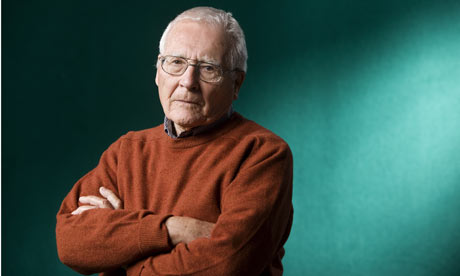
James Lovelock: Humans Are Too Stupid To Prevent Climate Change

Humans are too stupid to prevent climate change, according to the British scientist James Lovelock. Illustration: Murdo Macleod

From The Guardian:

In his first in-depth interview since the theft of UEA emails, the scientist blames inertia and democracy for lack of action.

Humans are too stupid to prevent climate change from radically impacting on our lives over the coming decades. This is the stark conclusion of James Lovelock, the globally respected environmental thinker and independent scientist who developed the Gaia theory.

Read more ....

Sex Infection Gonorrhea Risks Becoming "Superbug"

From Reuters:

The sexually transmitted disease gonorrhea risks becoming a drug-resistant "superbug" if doctors do not devise new ways of treating it, a leading sexual health expert said.

Catherine Ison, a specialist on gonorrhea from Britain's Health Protection Agency said a World Health Organization (WHO) meeting in Manila next week would be vital to efforts to try to stop the bug repeatedly adapting to and overcoming drugs.

"This is a very clever bacteria. If this problem isn't addressed, there is a real possibility that gonorrhea will become a very difficult infection to treat," she said in a telephone interview.

Read more ....

YouTube's 50 Best Videos


From Time Magazine:


YouTube — breeding ground for the Web's wackiest and wildest viral videos — turns 5 in 2010. In recognition, TIME takes a look back at the site's 50 greatest hits

YouTube's most viewed video of all time is an unlikely champion. Seen more than 170 million times since its posting in May 2007, "Charlie Bit My Finger" was never meant to be anything more than a family flick. But the Internet's hive mind saw something it liked and catapulted the clip, which depicts a laughing British baby gnawing on the finger of his crying brother, past "Evolution of Dance" as YouTube's views champ by the fall of 2009.

Read more ....

How The Human Brain Got Bigger By Accident And Not Through Evolution

Colin Blakemore believes the human brain became bigger through genetic accident and not evolution. Photograph: David Hartley / Rex Features

From The Guardian:

Oxford neurobiologist Colin Blakemore tells Robin McKie why he thinks a mutation in the human brain 200,000 years ago suddenly made us a super-intelligent species.

According to Woody Allen, it is his second favourite organ and it absorbs more than 25% of the energy that our bodies generate. But why? For what purposes did the human brain evolve and why does it take so much of our physiological resources?

Read more ....

3DTVs Too Expensive For Mass Market

Sam Worthington and Zoe Saldana in Avatar, or Dances with Wolves in Space 3D, to give it its working title Photo: REUTERS

From The Telegraph:

A survey suggests that 53 per cent of consumers won’t pay more than £499 for 3DTVs, which currently retail at around £2,000.


Three dimensional television might be the latest product to be receiving all the hype, but a new survey suggests that just 1.4 per cent of consumers are willing to pay the £2,000 price tags that new sets typically carry.

In a survey for discount site VoucherCodes.co.uk, 28.6 per cent of those asked said they would like to buy a 3DTV but that current prices were far too high. More than half – 53 per cent – said that they would only be willing to pay up to £499.

Read more ....