Monday, November 17, 2008

Gulf War Research Panel Finds 1 In 4 Veterans Suffers From Illness Caused By Toxic Exposure

From E! Science News:

At least one in four of the 697,000 U.S. veterans of the 1991 Gulf War suffer from Gulf War illness, a condition caused by exposure to toxic chemicals, including pesticides and a drug administered to protect troops against nerve gas, and no effective treatments have yet been found, a federal panel of scientific experts and veterans concludes in a landmark report released Monday. The Congressionally-mandated Research Advisory Committee on Gulf War Veterans' Illnesses presented the report today to Secretary of Veterans Affairs James Peake at VA headquarters in Washington.

Scientific staff support to the Committee is provided by the Boston University School of Public Health (BUSPH). The full report is posted at: http://sph.bu.edu/insider/racreport

Read more ....

The Energy Debates: Wind Farms

Analysts estimate it would take at least 260,000 turbines, each 300 feet tall, to meet the United States' electricity needs. These turbines are in King City, Mo.
Credit: MU Cooperative Media Group, Steve Morse photo

From Live Science:

Editor's Note: "The Energy Debates" is a LiveScience series about the pros, cons, policy debates, myths and facts related to various alternative energy ideas. We invite you to join the debate by commenting directly on each article.

The Facts

Wind farms harness the wind's energy to generate electricity. Wind energy actually comes mainly from the sun. When solar energy heats up the atmosphere, hot air rises while cooler air swirls down to replace it. This movement results in wind.

Wind turbines possess massive rotors typically 160 to 300 feet (48 to 91 meters) in diameter. A wind turbine inland can generate 1.5 to 2.5 megawatts, while one located offshore amid mighty coastal winds could reach 5 megawatts, although constructing turbines in the water and keeping them up in the face of ocean waves and corrosive seawater presents challenges. Altogether, banks of turbines on a wind farm can produce anywhere from 100 to 800 megawatts.

Read more ....

How Eating Red Meat Can Spur Cancer Progression: New Mechanism Identified


From Science Daily:

ScienceDaily (Nov. 14, 2008) — Researchers at the University of California, San Diego School of Medicine, led by Ajit Varki, M.D., have shown a new mechanism for how human consumption of red meat and milk products could contribute to the increased risk of cancerous tumors.

Their findings, which suggest that inflammation resulting from a molecule introduced through consumption of these foods could promote tumor growth, are published online this week in advance of print publication in the Proceedings of the National Academy of Sciences (PNAS).

Read more ....

Sunday, November 16, 2008

Once Greeted Warmly, Google Wears Out Welcome

Google's Street View mapping service is available in France, Italy and Spain, but privacy laws threaten its expansion elsewhere in Europe. Image From International Herald Tribune

From International Herald Tribune:

BERLIN: When Google began hiring in Zurich for its new engineering center in 2004, local officials welcomed the U.S. company with open arms. Google's arrival is still bearing fruit for Zurich: 450 employees, about 300 of them engineers, work in Google's seven-story complex in a converted brewery on the outskirts of the placid mountain metropolis.

But almost five years into its expansion into Europe - where it has a headquarters in Dublin, large facilities in Zurich and London and smaller centers in Denmark, Russia and Poland, among other countries - Google is beginning to bump up against a web of privacy laws that threaten its growth and the positive image it has cultivated as a company dedicated to doing good - its unofficial motto.

Read more ....

Dirty Brown Clouds Impact Glaciers, Agriculture And The Monsoon

Pollution in Bangkok. The cities of Bangkok, Beijing, Cairo, Dhaka, Karachi, Kolkata, Lagos, Mumbai, New Delhi, Seoul, Shanghai, Shenzhen and Tehran were found to have very high soot levels. (Credit: iStockphoto)

From Science Daily:

ScienceDaily (Nov. 16, 2008) — Cities from Beijing to New Delhi are getting darker, glaciers in ranges like the Himalayas are melting faster and weather systems becoming more extreme, in part, due to the combined effects of man-made Atmospheric Brown Clouds (ABCs) and greenhouse gases in the atmosphere.

These are among the conclusions of scientists studying a more than three km-thick layer of soot and other manmade particles that stretches from the Arabian Peninsula to China and the western Pacific Ocean.

Read more ....

The Movies -- The Best Fictional Doomsday Devices

The Death Star (Star Wars)

From Wired News:

America's love affair with the doomsday device is a turbulent one. First popularized in comic books and James Bond movies, then lampooned by Austin Powers, we love them because their ridiculousness makes us feel safe — like the exhilarating false danger of a roller coaster.

Now heightened audience cynicism has forced world-ending devices into the realm of camp, and except for a new breed of superhero movies, they've largely been replaced by natural disasters or apocalyptic sci-fi scenarios in Hollywood films.

Read more ....

Variable Electric Generator Improves Wind Power Efficiency

(Photo form Talking Tourism)

From Future Pundit:

An interesting article in MIT's Technology Review reports on a generator for wind turbines that can harvest electric power over a wider range of wind speeds.

ExRo Technologies, a startup based in Vancouver, BC, has developed a new kind of generator that's well suited to harvesting energy from wind. It could lower the cost of wind turbines while increasing their power output by 50 percent.

The new generator runs efficiently over a wider range of conditions than conventional generators do. When the shaft running through an ordinary generator is turning at the optimal rate, more than 90 percent of its energy can be converted into electricity. But if it speeds up or slows down, the generator's efficiency drops dramatically.

Read more ....

Young Innovators Learn To Pitch Big Ideas

Selling it: At the PopTech conference in Camden, Maine, Manoj Sinha discusses how discarded rice husks can be used to generate electricity. (Courtesy of Kris Krug/PopTech)

From The Christian Science Monitor:

‘Boot camp’ in Maine teaches them how to get their message across in five minutes.

You’ve got a world-changing idea. And a passion to make it happen.

That’s good. But you need a third element: The ability to “pitch” your idea to venture capitalists and others who can help turn your dream into reality.

Budding business tycoons or Hollywood script writers know the importance of marketing themselves and their projects. But those in the nonprofit world, whose goal is altruistic, may never have thought about how to put a dazzling sheen on their quick “elevator pitch.”

Learning what goes into a perfect pitch was just one of the practical skills taught to a group of up-and-coming “social innovators” last month at the 12th annual PopTech conference in Camden, Maine.

Read more ....

The World Has Never Seen Such Freezing Heat

A sudden cold snap brought snow to London in October. Photo from The Telegraph

From the Telegraph:

A surreal scientific blunder last week raised a huge question mark about the temperature records that underpin the worldwide alarm over global warming. On Monday, Nasa's Goddard Institute for Space Studies (GISS), which is run by Al Gore's chief scientific ally, Dr James Hansen, and is one of four bodies responsible for monitoring global temperatures, announced that last month was the hottest October on record.

Read more ....

Astronauts Inspect Spaceship For Any Damage

The U.S. space shuttle fleet, including the Endeavour, seen here as it approaches the international space station in 2001, is set to return to flight by the middle of 2005, more than two years after the Columbia tragedy. NASA file

From MSNBC:

At least two pieces of debris were spotted Friday night in launch photos

CAPE CANAVERAL, Fla. - Space shuttle Endeavour's astronauts unfurled a 100-foot, laser-tipped pole and surveyed their ship for any launch damage Saturday while drawing ever closer to their destination, the international space station.

At least two pieces of debris were spotted Friday night in launch photos, Mission Control reported, and engineers were poring over the images to determine whether anything hit Endeavour. Mission Control told the astronauts there were no obvious signs of damage.

Read more ....

Marine Dead Zones Set To Expand Rapidly

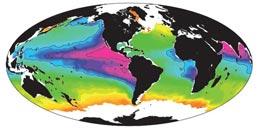
Oxygen content of the world's oceans. Regions with low oxygen are shown in red. IFM-GEOMAR

From Nature:

Rising levels of carbon dioxide could increase the volume of oxygen-depleted 'dead zones' in tropical oceans by as much as 50% before the end of the century — with dire consequences for the health of ecosystems in some of the world's most productive fishing grounds.

At depths between several tens and hundreds of metres, large parts of the tropical oceans are poorly supplied with dissolved oxygen, and are therefore hostile to most marine life. Scientists suspect that these zones are sensitive to climate change, but previous studies have arrived at conflicting conclusions regarding exactly how and why a more CO2-rich world affects oceanic oxygen content.

Read more ....

EBay Seller Gets Millionth Positive Feedback

Fox News:

NEW YORK — If you've ever sold something on eBay, you may have been pleased to receive positive feedback from the buyer. Multiply that by a million, and you can imagine how Jack Sheng feels.

Sheng, 33, owns Los Angeles-based Eforcity Corp., which has been selling electronics accessories on the online auction site since he started his business in 2000 with two childhood friends.

In the past two months, four separate eBay user IDs belonging to Sheng and his company each surpassed more than 1 million feedback points. No one else on eBay has come close.

Read more ....

Saturday, November 15, 2008

World's Fastest Scientific Supercomputer

From Knoxnews:

OAK RIDGE - Oak Ridge National Laboratory had promised a breakthrough performance from its newly arrived Cray XT5 supercomputer, but Monday's announcement was still a stunner.

The "Jaguar" system is now the world's fastest computer for science research, capable of 1.64 petaflops - or 1.64 quadrillion mathematical calculations per second. A quadrillion is equivalent to 1,000 trillion.

"It's going to be really exciting times in terms of the kind of science that's being done," Thomas Zacharia, ORNL's computational science leader, said Monday.

Read more .....

Telcos: Don't Mess Up The Internet With Regulation


From CNET News:

WASHINGTON--Representatives from industry, government, and advocacy groups agreed on Thursday that the Internet needs to be open and widely available throughout the United States. The question is how to get there.

A newly emboldened Democratic Congress is sure to have a long wish list, including new Internet regulations that corporations believe are unwise or unnecessary. Net neutrality regulations are one possibility, as is broadband and spectrum legislation. But it's unclear where the money to pay for sweeping new projects will come from--neither tax increases nor deficit spending on tech seem that likely when a Wall Street and Detroit bailout are center stage--so today's laws and regulations may end up being extended by default.

Read more ....

Stone Age Temple May Be Birthplace of Civilization

One of the T-shaped monoliths in Gobekli Tepe, this one bearing a relief of a fox.
Wikimedia Commons

From FOX News:

It's more than twice as old as the Pyramids, or even the written word. When it was built, saber-toothed tigers and woolly mammoths still roamed, and the Ice Age had just ended.

The elaborate temple at Gobelki Tepe in southeastern Turkey, near the Syrian border, is staggeringly ancient: 11,500 years old, from a time just before humans learned to farm grains and domesticate animals.

According to the German archaeologist in charge of excavations at the site, it might be the birthplace of agriculture, of organized religion — of civilization itself.

"This is the first human-built holy place," Klaus Schmidt of the German Archaeological Institute says in the November issue of Smithsonian magazine.

Read more ....

Unhappy People Watch TV, Happy People Read/Socialize, Says Study

From E! Science News:

A new study by sociologists at the University of Maryland concludes that unhappy people watch more TV, while people who describe themselves as very happy spend more time reading and socializing. The study appears in the December issue of the journal Social Indicators Research. Analyzing 30-years worth of national data from time-use studies and a continuing series of social attitude surveys, the Maryland researchers report that spending time watching television may contribute to viewers' happiness in the moment, with less positive effects in the long run.

Read more ....

Artificial Diamonds - Now Available in Extra Large

From The New Scientist:

Diamonds are a girl's best friend, they say - and soon they could be every girl's best friend.

A team in the US has brought the world one step closer to cheap, mass-produced, perfect diamonds. The improvement also means there is no theoretical limit on the size of diamonds that can be grown in the lab.

A team led by Russell Hemley, of the Carnegie Institute of Washington, makes diamonds by chemical vapour deposition (CVD), where carbon atoms in a gas are deposited on a surface to produce diamond crystals.

The CVD process produces rapid diamond growth, but impurities from the gas are absorbed and the diamonds take on a brownish tint.

These defects can be purged by a costly high-pressure, high-temperature treatment called annealing. However, only relatively small diamonds can be produced this way: the largest so far being a 34-carat yellow diamond about 1 centimetre wide.

Read more ....

CO2 May Prevent Next Ice Age: Study

The researchers warn their finding is not an argument in favour of global warming (Source: NASA/Goddard Space Flight Center Scientific Visualization Studio)

From ABC News (Australia):

Scheduled shifts in the earth's orbit should plunge the planet into a deep freeze thousands of years from now, but current changes to our atmosphere may stop it from occurring, say scientists.

Professor Thomas Crowley of the University of Edinburgh, and Dr William Hyde of the University of Toronto report in the journal Nature that the current level of carbon dioxide (CO2) in our atmosphere could negate the onset of the next Ice Age, which could occur 10,000 years from now.

Read more ....

Mysterious Microbe May Play Important Role In Ocean Ecology

These unidentified cyanobacteria were collected in the Pacific Ocean near Hawaii. (Credit: Photo by Rachel Foster)

From Science Daily:

ScienceDaily (Nov. 15, 2008) — An unusual microorganism discovered in the open ocean may force scientists to rethink their understanding of how carbon and nitrogen cycle through ocean ecosystems. A research team led by Jonathan Zehr, professor of ocean sciences at the University of California, Santa Cruz, characterized the new microbe by analyzing its genetic material, even though researchers have not been able to grow it in the laboratory.

Zehr said the newly described organism seems to be an atypical member of the cyanobacteria, a group of photosynthetic bacteria formerly known as blue-green algae. Unlike all other known free-living cyanobacteria, this one lacks some of the genes needed to carry out photosynthesis, the process by which plants use light energy to make sugars out of carbon dioxide and water.

Read more ....

Grandma Is Better Babysitter Than Mom

From Live Science:

Common wisdom might suggest that because of their age, grandmothers are inappropriate caretakers for infants and children.

Sure, they might have years and years of parenting experience from bringing up their own children (and they must be OK parents because their children obviously lived long enough to have children) but people over 50 simply can't run as fast or react as quickly as young parents. And they presumably tire more quickly and must want to take a load off even more often than the most exhausted parent.

Read more .....